
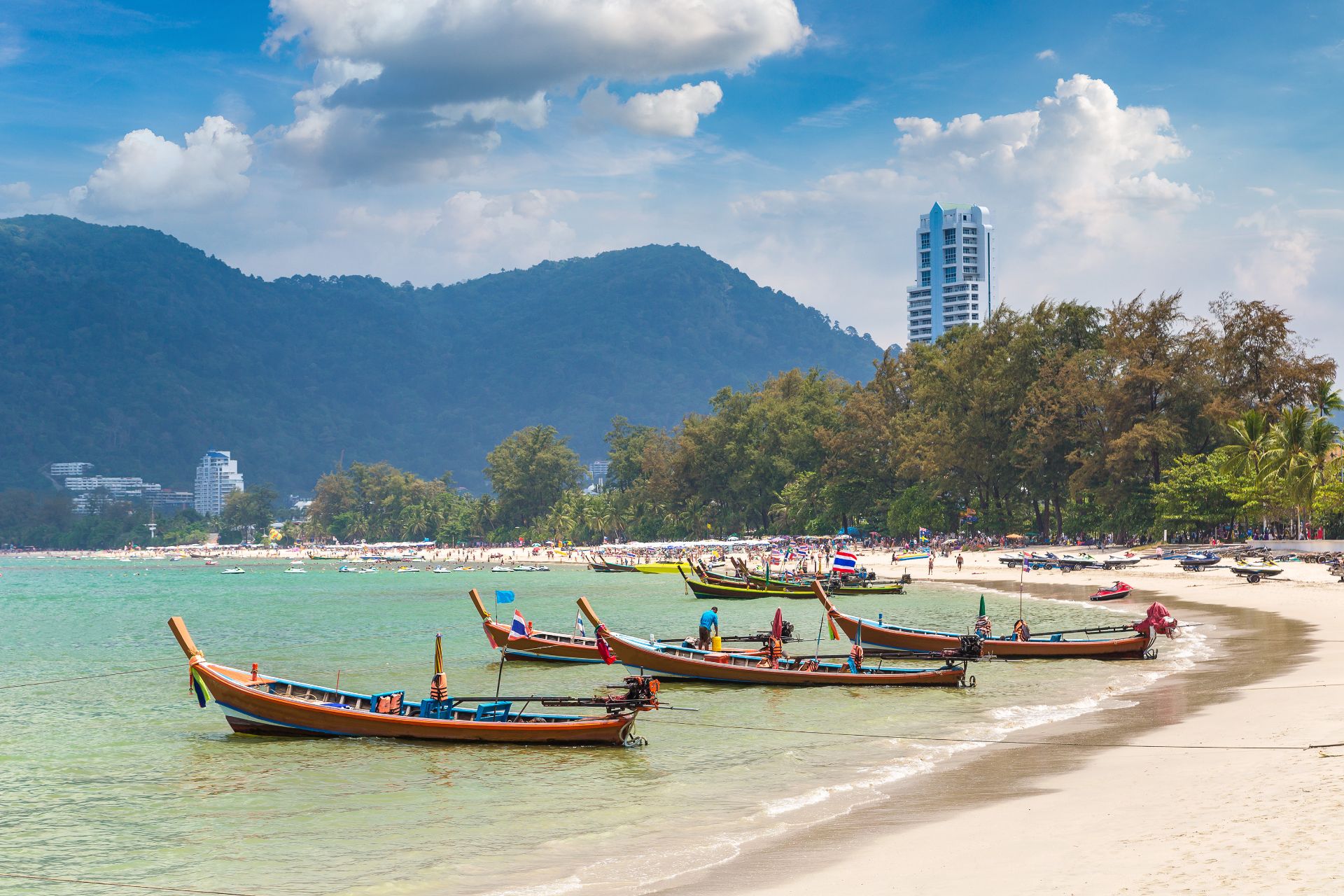
Patong Real Estate: Investing in the Commercial Heart of Phuket
Patong is much more than just the island center for nightlife; it is Phuket at its most intense.
While the quiet slopes of the south offer a slower pace, Patong thrives on a different kind of energy.
It is an urban grid where every street from the beachfront to the hills functions as an active part of a massive economic engine.
Investing here is not about escaping the world; it is about being right in the middle of it, where the demand for short-term rentals never truly takes a day off.
If you are looking for a property in Patong, you are choosing a market that has already matured.
There is no empty land left to discover, and every square meter has a purpose. From the managed condominiums near the neon glow of Bangla Road to the quiet luxury of hillside estates overlooking the bay, the focus here is on performance.
It is a place for those who value liquidity and high frequency rental returns over the secluded silence found elsewhere on the island.
Location Power: Acts as the essential bridge between Kamala and Karon, turning every street into a high visibility zone for commerce.
Neighborhood Diversity: Offers a dual experience between the vibrant energy of the central bay and the quiet residential retreats of Nanai Road and the hillsides.
Market Stability: A mature environment where new supply is naturally capped, protecting the value of existing freehold and resale units.
Operational Edge: Proximity to Patong Hospital and major retail hubs like Jungceylon ensures year round occupancy regardless of beach weather.
Legal Security: The distinction between licensed hotel units and residential condos allows for precise alignment with an owner’s rental strategy.
Asset Resilience: Buildings with proactive Juristic management and healthy sinking funds represent the most secure resale opportunities.
Lifestyle Luxury: Provides an independent urban life where world class amenities are within walking distance, a rarity in the more isolated northern districts.
Geographic Protection: Strict building height codes on the hillsides preserve sea views and maintain the exclusivity of existing hillside estates.
The Patong Market: Why High Occupancy Drives Every Investment
Patong operates on a scale of volume that simply does not exist anywhere else on the island. While a villa in a quiet southern village relies on a very specific type of tenant, a studio near the bay appeals to almost everyone from solo digital nomads to holiday groups.
This constant flow of people creates a floor for property values that remains resilient through any season.
In this market, you are not just buying square meters; you are securing a position in the primary arrival point of Phuket.
The logic here is simple: as long as the world knows Phuket, it knows Patong, ensuring that your property stays active while quieter districts wait for the sun.
Year Round Demand: Breaking the Seasonal Cycle
The biggest mistake is treating Patong like a seasonal resort town. It is actually a fully functioning city where the infrastructure supports life twelve months a year.
Property values stay stable because everything from the major retail hubs like Jungceylon and Central Patong to essential services like Patong Hospital and various private clinics remains open regardless of the weather.
Demand here is a geographic certainty. It does not matter if a unit is close to the neon energy of Bangla Road or tucked away in the more residential streets; the sheer density of services and entertainment keeps the rental interest alive.
During the rainy months, while other beaches struggle for attention, Patong remains the central destination for those who want accessibility and convenience.
This reliability is what separates a speculative purchase from a serious income generating asset that functions on its own terms.
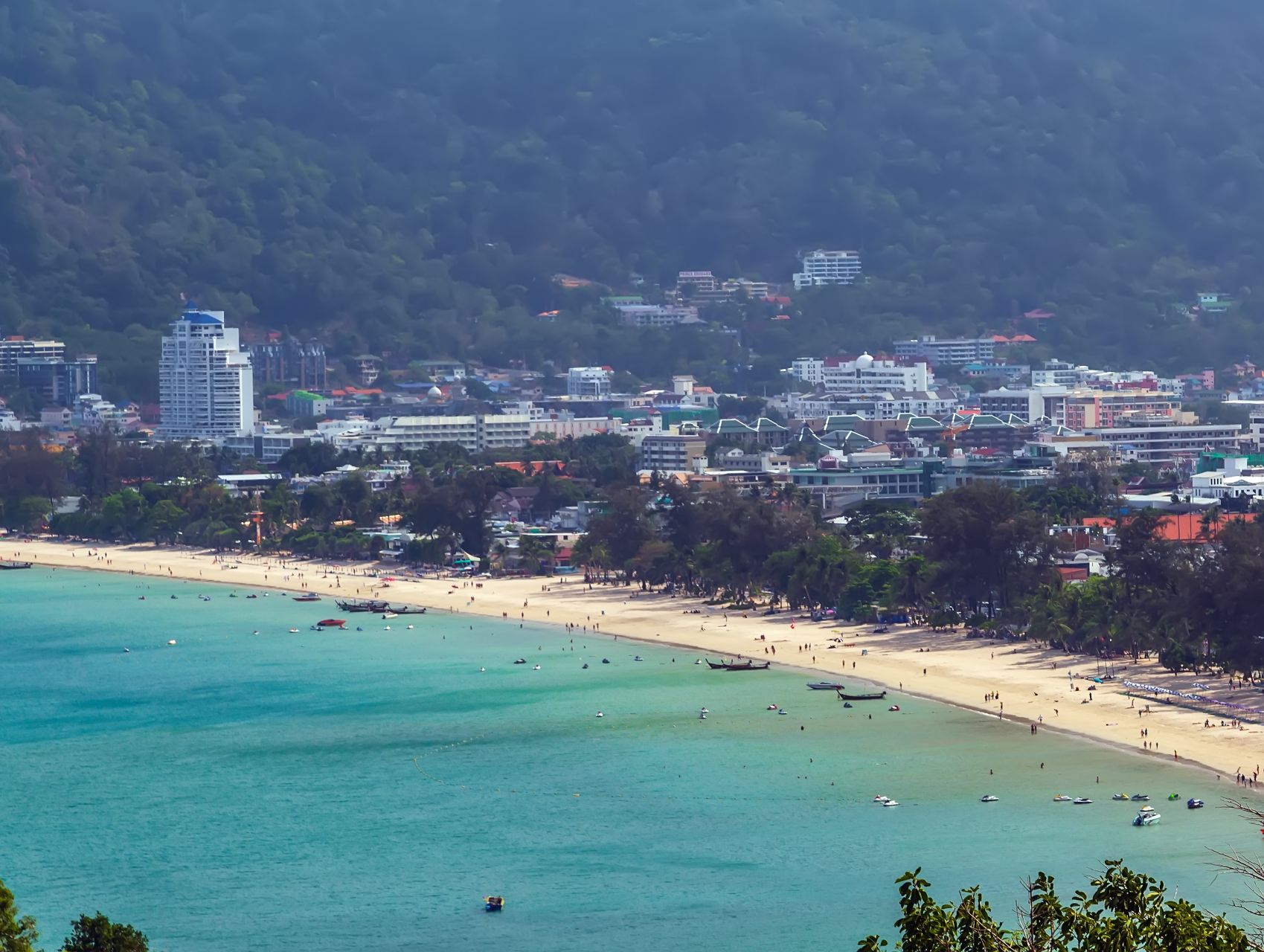
Property Segments: Sea View Condos and Rare Hillside Estates
Patong is a city that has already found its final shape. Because there is no empty land left to claim, every square meter is used with a specific purpose in mind.
This maturity makes the market predictable and transparent for anyone looking to secure a footprint in the busiest part of the island.
Investment Grade Condominiums: Managed for Short-Term Success
Most of the properties you see in the central bay are condominiums built with one goal in mind; to be high performance rental assets. These units are rarely about personal residence or quiet retreats.
They are functional spaces designed to handle the constant flow of guests who want to be steps away from Jungceylon, Central Patong, and the nightlife.
If you are looking here, the real value lies in professional management. A building with an on site hospitality team is not just a convenience but a necessity to keep a property occupied and maintained in such a high energy environment.
Hillside Scarcity: The Value of Permanent Horizons
If the valley floor is about density and service, the hillsides are about scarcity. True villas and sea view estates are rare in Patong because the steep terrain makes construction a massive challenge. For an investor, this difficulty is actually a protection.
The natural slope ensures permanent horizons that cannot be blocked by future projects. You get a quiet perspective of the bay while remaining within minutes of Patong Hospital and the essential medical clinics below.
It is the only part of the area where you can find a balance between the intense street energy and the privacy of a protected view.
Patong Commerce: The Center of the Island Gravity
Patong is the only location in Phuket where the crowd is a permanent geographic feature rather than a seasonal trend.
While other districts function as isolated destinations, Patong serves as the primary transit hub connecting the north and south of the island.
Every vehicle moving between Kamala, Kathu, and Karon must navigate through these streets, turning every commercial storefront into a high visibility asset.
It is a place where the local community from across Phuket meets the global traveler, ensuring that the streets remain active long after the beach crowds have departed.
Commercial Evolution: The Shift Toward Modern Utility
Because every square meter of the valley floor is occupied, growth no longer comes from new land but from the transformation of existing structures.
This is a market of constant renewal where aging shophouses and older buildings along Nanai Road or the hillsides of Kalim are being reimagined.
A traditional space that once housed a massage parlor can easily pivot into a boutique clinic, a specialty cafe, or a modern office suite.
This flexibility allows property owners to adapt to the changing demands of the island, ensuring that assets near Jungceylon and Central Patong remain relevant regardless of how the market evolves.
Market Velocity: The Security of Constant Demand
The decision to invest in Patong is often driven by the speed at which capital can move. Unlike the niche villa markets that rely on a very specific type of buyer, Patong properties belong to a global ecosystem that is understood by everyone.
The demand is not just tied to the neon energy of Bangla Road; it is supported by the massive daily footfall of locals and residents who come here for shopping, medical services at Patong Hospital, and weekend entertainment.
This diverse pool of users creates a level of liquidity that is unmatched elsewhere, making it significantly easier to exit a position or find a new operator when the time comes to sell.
Choosing the Right Area: Patong Energy vs. The Quiet South
Phuket is an island of extremes where deciding where to hold property depends on the specific commercial or personal goal of the owner.
There is no single best location but there is a clear distinction between the urban density of the center and the residential pace of the south.
Patong represents the commercial peak of the island where every street functions as part of a transit hub connecting Kamala and Karon.
Strategic Comparison: Balancing Performance and Preservation
Understanding the difference between these zones requires looking at how a property functions over a decade.
While Patong offers immediate cash flow due to the sheer volume of visitors, areas like Kata or the southern districts focus on long-term value and a different demographic profile.
Feature | Patong Center | Kata Beach | Southern Districts (Rawai) |
|---|---|---|---|
Primary Driver | Global Tourism & Transit | Family Tourism & Surfing | Residential Life & Community |
Rental Velocity | Extremely High | High (Seasonal) | Moderate (Long-Term) |
Market Maturity | Fully Developed | Mature | Growing |
Occupancy Focus | Short-Term Groups | Families & Couples | Expats & Digital Nomads |
Liquidity | Immediate | Fast | Moderate |
Lifestyle vs. Performance: The Urban Choice
The choice between the high energy center and the southern bays is a decision between a high performance asset and a lifestyle retreat.
Patong is for those who value being within walking distance of Jungceylon, Central Patong, and the medical infrastructure that serves the entire island.
It is a location built for mass appeal where the exit strategy is supported by constant demand from both local residents and international investors.
Kata however serves as the strategic middle ground. It retains much of the commercial strength found in Patong but trades the intense transit noise for a more family oriented atmosphere. For those who find the central bay too dense but the south too secluded,
Kata provides an essential link in the Phuket property market. Choosing between these areas is not about finding the best beach; it is about deciding whether a property should function as a high frequency income generator or a quiet sanctuary with steady appreciation.
Expert Insight: Navigating Infrastructure and Legal Requirements
Investing in a mature market like Patong requires a technical eye that looks beyond the surface aesthetic.
Because the city has developed in stages over several decades, the quality of a property is not defined by the district’s age but by the specific standards of each building.
Success in this environment is found by identifying properties where the engineering and management have kept pace with the island’s highest demand levels.
Infrastructure Reality: The Importance of Building Management
Patong has a robust and tested infrastructure that handles more volume than any other part of Phuket.
However, the experience within a specific unit depends entirely on the building’s internal systems. In any high density urban area, two side-by-side properties can offer different levels of reliability depending on their construction period and maintenance history.
A well managed building ensures that its private water storage, power surge protection, and drainage systems are optimized for the tropical climate. For a serious investor, the quality of the onsite management team and their record of system upgrades are the true indicators of a property’s long-term durability.
Regulatory Compliance: Hotel Licenses and the Hotel Act
The Thailand Hotel Act creates a clear divide between standard residential living and commercial rental operations. Any property in Patong intended for high frequency daily rentals must legally meet stricter fire safety and structural standards to hold a hotel license.
This is an operational choice rather than a simple legal hurdle. A licensed property offers a regulated environment for short-term guests, while a standard condominium is built for long-term stability.
The decision depends on the owner; you either prioritize the high turnover of a licensed hotel or the lower overhead of a traditional residential asset.
Patong Investment Guide: Common Questions And Truths
Patong requires a different mental map depending on whether the goal is a high performance rental or a quiet summer home. To navigate this market, one must look past the neon lights and understand the structural and social layers of the city.
Market Dynamics and Ownership
- Is Patong too saturated for new property buyers?
Saturation is the primary reason why values here are stable. Because no vacant land remains in the central bay, the supply of new units is capped by geography. You are buying into a finished environment where the infrastructure and the revenue streams are already proven. The opportunity lies in finding well positioned older assets and bringing them up to modern standards. - What is the reality of the Foreign Freehold quota?
Many older condominiums in Patong have already hit their 49 percent foreign ownership limit. This means many units are only available as Leasehold. A serious buyer must verify the quota status before any deposit is paid. Securing a Freehold title in this district is increasingly rare and remains the most liquid way to hold capital in Phuket. - Why does the resale market often outperform new launches?
The best locations were claimed decades ago. New projects are often forced into cramped peripheral lots with difficult access. An established building in a prime position, even if it requires renovation, often provides a better return because its location is impossible to replicate.
Lifestyle and Residential Living
- Can Patong function as a quiet summer home?
The hillsides and the northern edge near Kalim offer a total escape from the street noise. These quiet pockets are where long-term residents live. You get the benefit of being minutes from world class hospitals and shopping while maintaining a private retreat that feels completely disconnected from the nightlife. - How is the local community for long-term expatriates?
Patong has the most established and diverse expat community on the island. This results in a social infrastructure that newer resort areas lack. From specialized hobby groups to local markets on Nanai Road, the city offers a functional life for residents that goes far beyond the holiday bubble. - Is a vehicle necessary for daily life in the city?
One of the greatest strengths of Patong is its walkability. Having major retail hubs like Jungceylon and medical facilities like Patong Hospital within a short walk is a luxury that few other Phuket districts provide. For seasonal residents, this accessibility reduces the logistical burden of daily errands.
Operational and Technical Realities
- Does the building management affect the resale value?
In Patong, the Juristic Person is the most important factor in your investment. A management team that maintains a strong sinking fund and keeps the common areas clean protects the value of the building as it ages. Always check the financial audits of the building before committing to a purchase. - What are the hidden costs of high density living?
Utility costs and common area fees can vary significantly between buildings. Some older projects have inefficient water and power systems that increase monthly overhead. It is vital to review the utility history of a unit to ensure that high consumption during the peak season does not erode the net yield. - How do height restrictions protect current owners?
Strict building codes prevent new high rise developments from obstructing existing views, especially on the hillsides. This regulatory ceiling ensures that your sea view or mountain perspective is protected. It prevents the oversupply issues seen in other emerging markets and solidifies the value of existing assets.